Fit2Excel

  • Home
  • Services
    • Sports Medicine Rehab
    • Sports Psychology Consulting
    • Fitness Bootcamp
    • Personal Training
    • Group & Team Training
    • Spartan Race Training
    • Summer Athletic Performance Camp
  • Membership
  • Classes
    • Class Descriptions
    • Schedule
    • Youth Camps & Programs
    • Create Account
  • About
    • Meet the Experts
    • Community & Partners
    • F2E Athletes in College
    • Testimonials
    • FAQs
    • Contact / Directions

December 4, 2017 by David Rosales

Low Back Pain: A Potential Culprit

Nearly all of us have been there. You wake up feeling great, the sun is shining and the beautiful December weather is in the air. You notice that one of your pillows fell off the bed while you were sleeping. Naturally, you casually reach down to pick it up (probably with a rounded back), and… ugh. You tweak your low back. You may know this story all too well. And if you’re feeling tight in your lower back, you are surely not alone. A 2009 study in Archives of Internal Medicine estimated that nearly 80% of Americans will experience low back pain at some point in their lives.
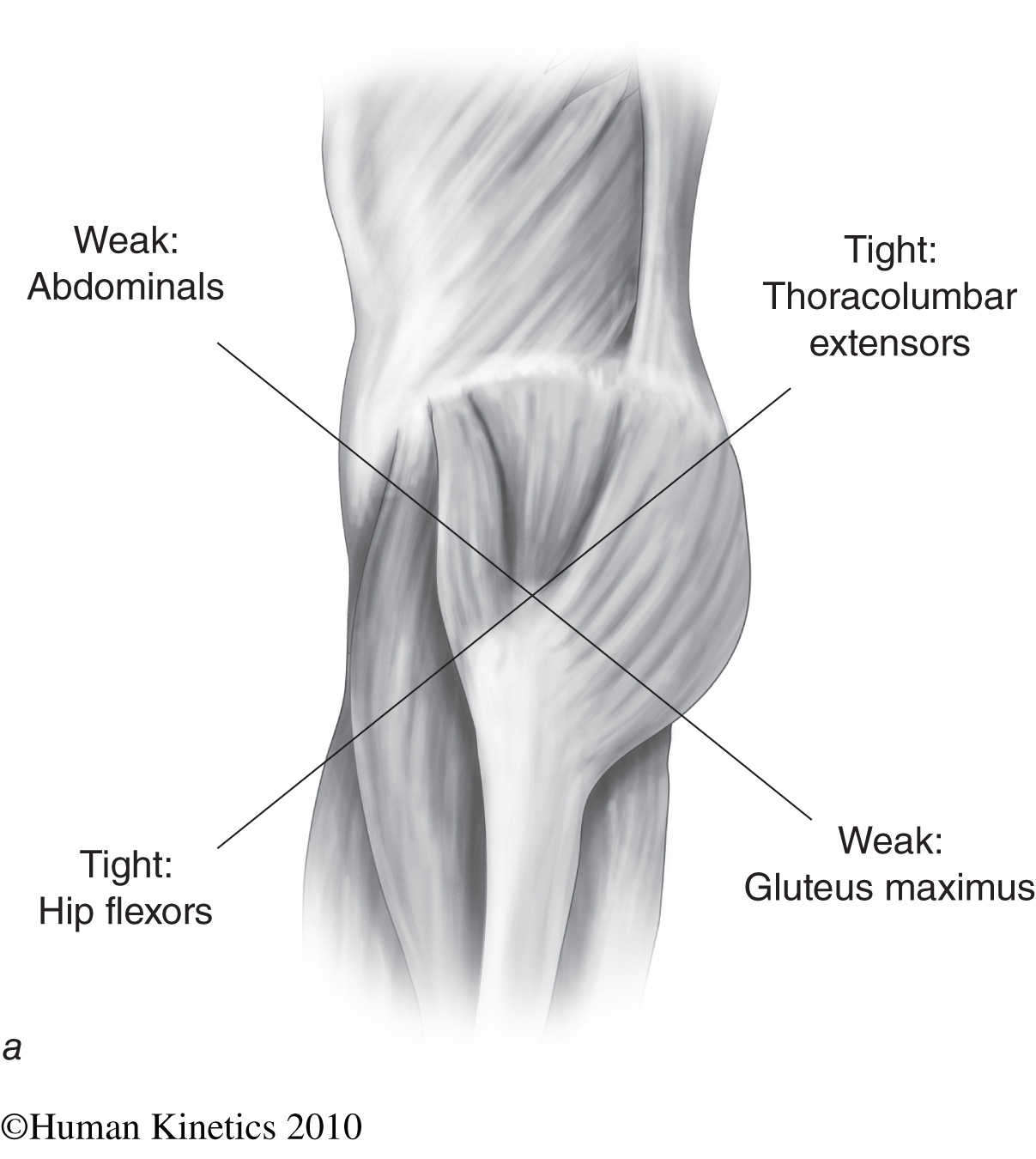
Lower Cross Syndrome

The most common postural fault that I witness every day in athletes of varying endeavors is known as Lower Cross Syndrome. Lower cross syndrome is where our hip flexors and low back extensors become increasingly tight, and glutes, hamstrings, and abdominals become increasingly weak. To compensate for these imbalances, your pelvis tilts anteriorly, which creates excessive spinal curvature, also known as hyperlordosis. This syndrome is less formally known as “Donald Duck butt,” due to the appearance of the person’s butt sticking out like Donald Duck. If you think about the lifestyles we lead, this makes perfect sense. We sit at a desk all day, drive our car with our hips in a flexed position, and then go play sports and do exercises that are predominantly performed with our hips in flexion. It is no wonder then, that we are unable to get out of this hip-flexed position when we exercise. Today’s post will focus on strengthening the hip extensors, but it is important to remember that they are just one piece of the puzzle in correcting this fault.
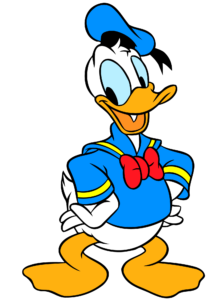
Due to excessive hip flexion, many people do not have the ability properly extend their hips at all. Their bodies are not able to distinguish between extension in the low back (lumbar extension), and extension through the hips. For example, one exercise that we commonly perform here is the stability ball hamstring curl. The goal with this exercise is to get the hamstrings, which are typically weak, to properly extend the hips. What do we mean by this? Well, the hamstrings, comprising of 3 muscles, (biceps femoris, semitendinosus, and semimembranosus) have 2 major functions:

  1. Flex the knee (knee flexion) – this one is most commonly seen in traditional hamstring training.
  2. Extend the hips (hip extension)- this is the key that is often overlooked. If we can simultaneously get into maximal knee flexion AND maximal hip extension, the hamstring will be in its fully shortened position.  
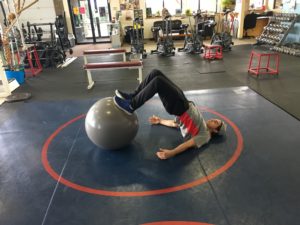
    At the top of a hamstring curl, knees are flexed AND hips are extended. 

However, when many people perform this exercise the extension does not come from the glutes and hamstrings. It comes from low back muscles that are already strong, particularly the quadratus lumborum (QL), which extends the lumbar spine, NOT the hips. In other words, the lumbar extensors are working in place of the hip extensors. Hamstring curls are a good example of this, but it is also very common at the top of deadlifts and squats, and essentially any exercise where hip extension is a part of the movement.

Donnie Thompson, the first person to hit a powerlifting total of 3,000 lbs, has called the QL, “an angry troll on your back.” Couldn’t have said it better myself. Our QL’s are, to be blunt, way too strong for our own good. Our QL works hard all day, performing actions that should be done by our glutes and hamstrings. Over countless reps day after day it should be a no surprise that this muscle becomes inflamed, causing low back pain.
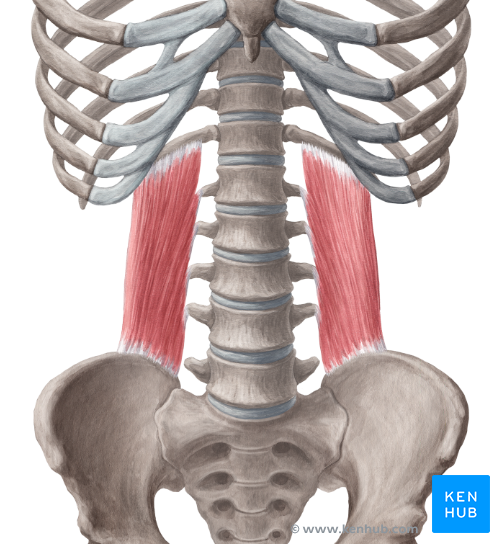
Quadratus Lumborum – a.k.a. angry troll

If you’ve ever taken a class here at Fit 2 Excel, you’re probably sick of us telling you to get into a pelvic tilt. What this means is to literally posteriorly tilt your pelvis and remove the curvature in your lumbar spine. When you can posteriorly tilt your pelvis, you put your QL into a position where it is very weak, so that the extension has to come from the hips, which will be primarily performed by the glutes and hamstrings. In nearly every exercise, from core exercises, to deadlifts, to push-ups, the pelvic tilt is where you should start every movement. In fact, I will take this one step further and propose that we should try to walk around in a pelvic tilt as much as you possibly can. If you can work out with good spinal mechanics for 1 hour, that’s great, but what about the other 23 hours? If you’re still sitting most of the day and moving around with your pelvis tilted anteriorly and thus your low back excessively arched, then long term change will likely not occur.

So, your call to action, is to, starting today, spend 5 extra minutes in that pelvic tilt. Turn off the lumbar extensors and turn on the hip extensors. As time goes by, gradually increase the amount of time. Ultimately, long term change only occurs with long term lifestyle and behavior change.

We’re always open to questions, comments, feedback, and suggestions. Reach out on social media, or if you would like to personally reach me you can email me at [email protected].


Works Cited

Boyle, Michael. New Functional Training for Sports. Human Kinetics, 2016.

“Donald Duck.” Disney Clips, Walt Disney.

Ferriss, Timothy. “Gymnast Strong.” Tools of Titans: the Tactics, Routines, and Habits of Billionaires, Icons, and World-Class Performers, Houghton Mifflin Harcourt, 2017.

Freburger, J K, and T S Carey. “The Rising Prevalence of Chronic Low Back Pain.” Archives of Internal Medicine, vol. 169, no. 3, 9 Feb. 2009.

Human Kinetics. “Lower Cross Syndrome.” Muscleimbalancesyndromes.com, Muscle Imbalance Syndromes, 2010.

“Quadratus Lumborum.” Ken Hub, Ken Hub.

Filed Under: In The News

November 2, 2017 by David Rosales

What I’ve Learned: Communication is Key

Since I started as a personal trainer at Fit 2 Excel, I have learned something new every single day. Whether it has a been a programming lesson, a coaching cue, or a business lesson, every day has brought new learning experiences. As a fitness professional, or any professional for that matter, it is paramount to continue your education, whatever form that may be in. Here are three of the biggest lessons I’ve learned in my brief time as a personal trainer.


  • Give fewer cues, use fewer words


My biggest challenge has been to find ways to communicate to athletes exactly what I’m looking for. That means for each exercise finding the right cue that will work for them. Admittedly this has been a struggle. Furthermore, when I cannot quite get an athlete into the proper position, I give way too many cues, and overwhelm them. We all understand what it’s like to be given 15 things to think about. The result is always the same: none of them occur. In learning environments where repetition is key to ingrain a pattern, like exercise, giving the person only one thing to focus on at a time is the best solution. Single tasking is significantly more effective in any learning process than multitasking. We all know this intuitively, because trying to consciously focus on two things at once means that neither gets done.This fact is directly applicable to how we as coaches should help the people we train improve. I remember on the first day of the outdoor summer athletic performance class this past summer I was teaching nearly 70 kids how to squat wrapped around me in a big circle. To start off, I said to all of the kids, probably in a mumbled voice, “Set your feet shoulder to hip with apart, shove your feet into the ground, create external rotation, shove your hips back, and, keeping your weight on your heels sink back into a squat.” I looked around and saw nothing but blank stares and a few broken squats. After this experience, I learned that maybe I should just start by saying, “Set your feet shoulder to hip width apart.”

Finding the right cue for the right individual in the right situation is admittedly very difficult. Turning the images in your mind into concise coaching cues will only come with experience. With trial and error, over time a system will be developed to give better and better coaching cues.

Furthermore, I have learned that most people that come to work out, plan to do exactly that; work out. Most clients don’t care for a physiological or anatomical explanation for why an exercise is effective and why I have included it. Early on, I developed a habit of needing to justify my exercise selection, rep scheme, rest periods, everything. To most, this is not important.They just want to be told how to get it done. I understand that not everybody is an exercise geek like myself, and have since backed off on the confusing explanations. So, I have had to learn how to individualize this aspect of coaching. Some are interested in hearing more about a particular movement or training parameter while others are not. Note: If you do care about a particular explanation, you are more than welcome to ask!

This skill of being clear and concise is applicable in any facilitator role, or any role for that matter. Think about areas in your life where you could be a more effective verbal communicator. Are your words mumbled? Do you simply give too many directions so there’s no chance of them being understood? I encourage you to look at where you are making similar mistakes, and take action to improve upon those aspects.


  • Show confidence


The first few weeks teaching bootcamps I was understandably nervous. I was confident in my competence as a coach but not as confident in how others would react to my coaching style and to my personal twist on our workouts. Looking back it was clear that this was portrayed in my body language and verbal communication. As time went on I learned how to make the classes more smooth, energetic, and fun without changing anything about the workout itself. Improving how I communicated sets, reps, and exercises made a huge difference on how people responded.

First, I started to improve my body language to be more confident. With shoulder blades back and hands out of pockets suddenly class became easier to teach. More eyes were looking at me and directions went much smoother. On the verbal side, I started to speak louder, clearer, and crisper. In that loud gym with music playing, it is paramount to give clear, understandable directions. By upping my voice volume about 20% and being more methodical with word choice and pronunciation, these problems have subsided greatly. So, although my confidence as a coach has been there since day one, how I show this confidence has drastically changed. By improving these areas, classes will continue to run smoother and smoother with repetition and practice.


  • Marketing is important


You can have the best product or provide the greatest service in the world, but without methods to get it to your clientele, it is useless. I imagined this job as spending most of the time writing workouts, researching exercise protocols, and, of course, coaching. Although these are undisputably a huge part of our job as fitness professionals, I underestimated the impact and importance of learning how to market our service. Within the first month I found myself speaking in middle school classrooms, folding up 100’s of brochures, and sitting in staff meetings dedicated to marketing. At first I was a little frustrated, spending my time doing non-coaching related tasks. But, I have come to realize that it is a huge piece of the puzzle.

On top of that, marketing is also how you present yourself in a professional setting, such as showing up on time to be prepared for class, and always wearing appropriate teaching attire. Little things like this make a huge difference in how we are perceived by those we work with. The key is in the details.

Wrapping Up:

What do each of these points have in common? Communication. Being the best at what you do is useless without methods to communicate it. The most successful businesses in any field are successful not just because they have a great product or service, but because they have the best protocols for getting that product or service to their customers. Communication skills and how we communicate make a huge impact on how we can best help those around us. I’m looking to continually develop these communication skills in numerous forms, from giving simpler cues to projecting my voice, to developing ways to market our service.


If you have any comments, questions, or wisdom, I’d love to hear what you have to say. Feel free to reach out on social media and give us your thoughts!

Filed Under: In The News

  • « Previous Page
  • 1
  • 2
  • 3


Purchase Membership
Purchase Punch Cards
View Class Schedule

Fitting Your Bike

May 29, 2020

Fitting Your Bike Author: Sierra Klotz, Licensed Physical Therapist & Athletic Trainer It’s time to get that bike back on the road again! With all the new rail trails, it has gotten much easier to go biking here in Vermont. Are you ready to go out and enjoy this beautiful weather? These next posts will […]

How to lose (or not gain) The “Covid-19”

Emerging With Strength

Fitness for the Competitive Athlete

Be The Change

Our Commitment

Established in 2008, family-owned and operated Fit2Excel provides a unique combination of services  from group fitness, to athletic performance training, and injury rehabilitation to neuro-cognitive concussion testing. As a Certified Athletic Trainer and Strength and Conditioning Coach, owner John Stawinski combines his education and experience to provide performance enhancement training during and after injury rehabilitation. Sheila Stawinski is an expert in Sports Psychology and serves as Leadership Director to varsity sports captains at three area high schools. Both John and Sheila have worked with National and Olympic level athletes from the Olympic Training Center in Lake Placid, New York. F2E offers a comprehensive, customizable approach to enable individuals to “do the most to be their best.”

Contact

14 Corporate Drive
Essex Junction, VT

(802) 871-5423
(802) 857-5074 fax
Email F2E
Get Directions

Copyright © · 2026 Fit 2 Excel. · All Rights Reserved. · Site by Earthlogic.